
Understanding the Golden Spice: Ancient times to a natural a...
Moringa and its Health Benefits
27 Oct, 2026


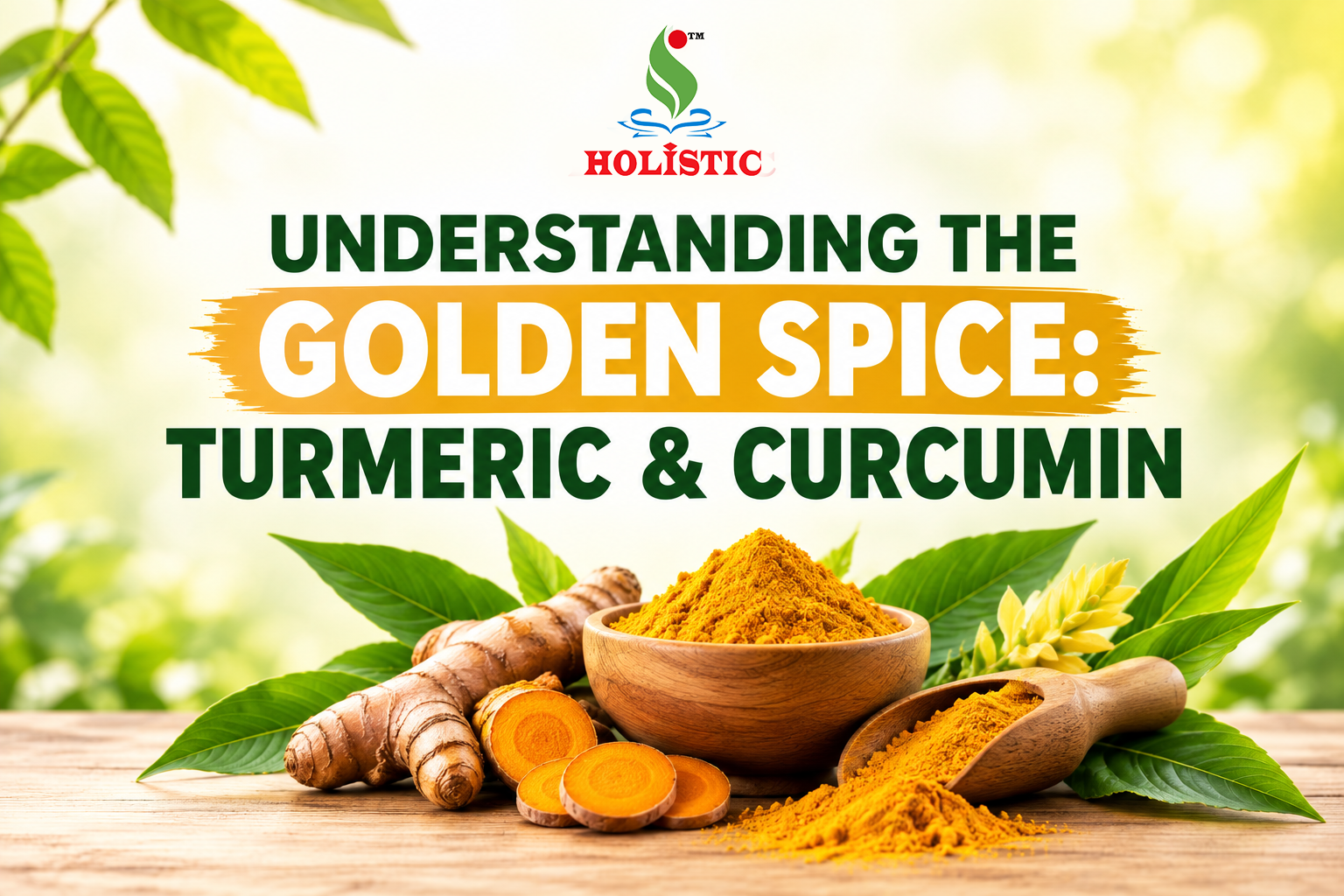
Understanding the Golden Spice: Ancient times to a natural anti-inflammatory Supplement
-
Holistic Health
-
06 Oct, 2026
Turmeric has been part of South Asian food, culture and traditional medicine for centuries. In Nepal and across the Indian subcontinent, it is familiar to almost everyone. We add it to curries, traditional preparations and home remedies, often without thinking much about the science behind its bright yellow color.
But turmeric is more than a kitchen spice.
One of its most studied compounds is curcumin, a naturally occurring plant compound belonging to a group of substances called curcuminoids. Modern research has taken a closer look at curcumin because of its antioxidant and anti-inflammatory properties and its potential role in supporting several aspects of health.
This is where traditional knowledge and modern nutritional science meet.
What is Turmeric?
Turmeric comes from the rhizome, or underground stem, of Curcuma longa, a member of the ginger family. It is widely cultivated and used throughout South and Southeast Asia.
Traditionally, turmeric has been used in Ayurvedic and other traditional medicine systems for a variety of purposes, including digestive complaints and inflammatory conditions. It is also an important culinary spice and natural coloring agent.
The familiar golden-yellow color of turmeric comes largely from curcuminoids, with curcumin being the best-known component.
However, there is an important distinction:
Turmeric is the whole plant material, while curcumin is one of its principal active compounds.
That distinction matters when discussing supplements.
What makes Curcumin interesting?
Curcumin has attracted considerable scientific attention because it appears to interact with several biological pathways involved in inflammation and oxidative stress.
Inflammation itself is not necessarily bad. It is a normal part of the body's defense and repair system. The problem can arise when inflammatory processes remain persistently activated.
Similarly, oxidative stress occurs when there is an imbalance between reactive molecules and the body's antioxidant defenses.
Curcumin has been investigated for its ability to influence inflammatory signaling and antioxidant activity. Human research has also examined its potential effects on areas such as joint health, metabolic markers and exercise-related muscle recovery.
This does not mean curcumin should be considered a cure for inflammation or chronic disease. The evidence varies considerably depending on the condition, formulation, dose and study design. That distinction is important when choosing a herbal supplement.
Curcumin and Joint health
One of the areas where turmeric and curcumin have received considerable attention is joint health.
Several clinical studies and reviews have investigated curcuminoids in people with osteoarthritis, particularly knee osteoarthritis. Some evidence suggests that turmeric or curcumin preparations help improve measures such as pain and physical function, although researchers continue to point out limitations in the available evidence and differences between formulations.
For someone experiencing occasional joint discomfort after physical activity, maintaining a healthy body weight, staying physically active, eating a balanced diet and getting adequate rest are still fundamental.
A curcumin supplement can be considered as part of that broader wellness approach, rather than as a replacement for medical treatment.
Curcumin and Antioxidant support
Our bodies naturally produce antioxidant defenses, but oxidative stress is influenced by factors such as ageing, poor diet, environmental exposure and intense physical activity.
Curcumin has demonstrated antioxidant activity in laboratory and human research and clinical studies have examined its effects on markers related to oxidative stress. A large 2024 systematic review and meta-analysis covering 103 randomized controlled trials found significant effects for several outcomes, including some inflammatory and oxidative-stress-related measures, although the strength of evidence differed between outcomes.
This is one reason curcumin continues to attract interest as a nutritional supplement.
Why choose a Curcumin Supplement?
Getting turmeric through food is an excellent way to include this traditional spice in a balanced diet. But dietary use and supplementation are not exactly the same.
A supplement provides a more concentrated and consistent amount of the relevant ingredient than ordinary culinary use.
For people who want to incorporate turmeric-derived curcuminoids into their daily wellness routine, a properly manufactured curcumin supplement can be a practical option.
Holistic Health Curcumin
Holistic Health Curcumin is available as a 90-capsule, 45-gram dietary supplement from Holistic Health Pvt. Ltd. The company describes the product as being derived from Curcuma longa and highlights the traditional and modern interest surrounding curcumin.
Holistic Health positions its products around the principle "Where Science Meets Nature", combining natural ingredients with quality-focused production and wellness-oriented practices. The company states that its food supplements are produced and handled with reference to standards including CODEX, ISO, GMP and HACCP.
For consumers in Nepal looking for a turmeric-derived supplement, this provides a convenient way to include curcumin as part of a broader wellness routine.
Who may consider Curcumin?
Curcumin may be of interest to adults who are looking to support:
- General antioxidant protection
- Healthy inflammatory balance
- Joint and mobility wellness
- Recovery following physical activity
- An overall healthy ageing lifestyle
- A natural, plant-based wellness routine
However, it should be viewed as a dietary supplement, not a medicine or substitute for medical treatment.
If you have persistent joint pain, swelling, digestive symptoms or another ongoing health problem, the underlying cause should be properly evaluated rather than relying on a supplement alone.
Turmeric in the Nepali Lifestyle
There is something particularly interesting about turmeric in Nepal. We do not need to introduce turmeric to Nepali households. It is already part of our food culture. The opportunity is to understand it better.
Instead of thinking of turmeric simply as a yellow spice or treating curcumin as a "miracle ingredient," it is more useful to understand where it fits into a healthy lifestyle.
A balanced Nepali diet, regular movement, healthy body weight, adequate sleep, stress management and appropriate medical care remain the foundation of good health.
Curcumin can potentially complement these habits.
That is the more sensible way to approach herbal supplementation.
Is Curcumin Safe?
For most adults, conventional oral turmeric or curcumin preparations are generally considered reasonably safe when used in recommended amounts for limited periods. However, some people may experience gastrointestinal effects such as nausea, stomach upset, acid reflux, diarrhea or constipation.
Anyone taking regular medicines should discuss herbal supplements with a qualified healthcare professional because herbs and medicines can sometimes interact.
Pregnant women should also seek professional advice before taking turmeric or curcumin supplements in amounts greater than those normally consumed in food.
Turmeric has survived centuries of culinary and traditional use, but its story is far from finished. Today,
curcumin is one of the most extensively studied compounds found in turmeric. Research suggests potential benefits related to inflammatory processes, oxidative stress and joint health, while newer studies continue to investigate its broader metabolic and wellness effects. At the same time, the scientific evidence is not uniform, and questions about formulation, dosage and bioavailability remain important.
That is why responsible herbal medicine should not be about making exaggerated promises. It should be about understanding the plant, understanding the science and choosing quality products.
For those looking to add turmeric-derived curcumin to their wellness routine, Holistic Curcumin offers a convenient capsule-based option derived from Curcuma longa.
Nature provides the ingredient. Science helps us understand it. And a healthy lifestyle provides the foundation.
Explore Holistic Health Curcumin
More Blogs are
11 Tips for a Healthy Daily Wellness Routine
Diabetes Management by Herbal Supplements
Herbal Supplements in Nepal: From Therapeutic point of view