
Ginseng Benefits: How This Traditional Herb Supports Energy,...
Moringa and its Health Benefits
27 Oct, 2026


Ginseng Benefits: How This Traditional Herb Supports Energy, Focus, Immunity & Wellness
-
Holistic Health
-
06 Oct, 2026
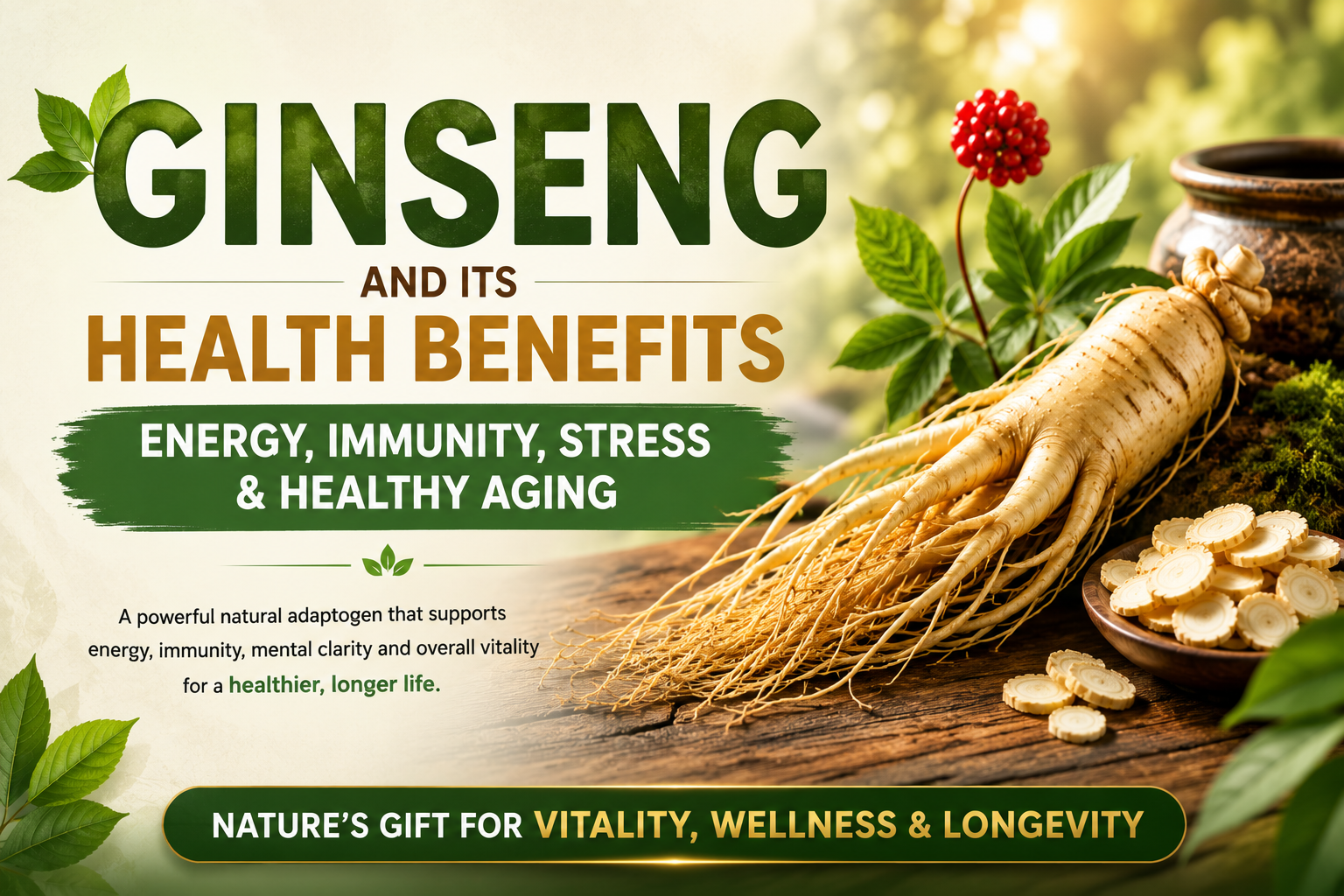
Ginseng and its health benefits
When ancient Chinese healers searched mountains for rare medicinal plants, they believed some herbs carried the very essence of life. Among these, ginseng stood above the rest. Revered for more than 2,000 years, this knotted root was once reserved for emperors, warriors and scholars seeking vitality, longevity and mental clarity.
Fast forward to today and ginseng has made a remarkable journey from traditional herbal medicine to modern wellness clinics, nutritional supplements, sports nutrition and stress-management programs. Whether you enjoy it as tea, extract, capsule or functional coffee, ginseng continues to fascinate both researchers and health-conscious individuals around the world.
In Nepal, where interest in natural health, herbal supplements and naturopathy is rapidly growing, ginseng is gaining attention as a gentle yet powerful ally for energy, immunity and overall wellbeing. Lets explore the story of ginseng from the ancient world to its modern applications.
What is Ginseng?
Ginseng refers to the roots of plants belonging mainly to the Panax genus. The word Panax comes from the Greek meaning “all-healing,” which hints at its historical reputation. The most commonly used types are:
• Asian or Korean ginseng (Panax ginseng): Traditionally used for vitality, stamina and mental performance.
• American ginseng (Panax quinquefolius): Considered milder and often used for stress relief and immune support.
• Siberian ginseng (Eleutherococcus senticosus): Not a true Panax ginseng, but widely used as an adaptogenic herb.
The active compounds responsible for many of ginseng’s effects are called ginsenosides, a group of plant chemicals that have been extensively studied for their influence on the nervous system, immune function, metabolism and inflammation.
A valuable root wrapped in legend
Ancient healers noticed that the ginseng root often resembled the shape of a human body, with branching “arms” and “legs.” According to the old Doctrine of Signatures, plants that looked like body parts were believed to support those organs or the whole body.
Stories tell of hunters risking harsh winters to find wild ginseng hidden deep in forests. A single mature root could be worth a fortune. In Traditional Chinese Medicine, ginseng was prescribed for:
• Fatigue and weakness
• Poor concentration
• Recovery after illness
• Low appetite
• Shortness of breath
• Age-related decline
Korean traditions later refined the cultivation and processing of ginseng, leading to products such as red ginseng, which is steamed and dried to enhance certain properties.
Ginseng meets Modern Science
Today, ginseng is no longer judged only by folklore. Scientists have investigated its effects in laboratory studies, animal research and human clinical trials. While it is not a miracle cure, evidence suggests that ginseng may provide meaningful support in several areas of health.
1. Natural Energy and Reduced Fatigue
One of the most popular reasons people use ginseng is to combat tiredness.
Unlike stimulants that may cause a sudden spike and crash, ginseng is classified as an adaptogen. Adaptogens help the body respond more efficiently to physical and mental stress.
Research suggests that ginseng may improve energy production at the cellular level and reduce feelings of fatigue, particularly in people experiencing chronic tiredness or stress-related exhaustion.
Think of it as a wise coach rather than a strict drill sergeant. It does not force the body into overdrive; it may help the body use its resources more effectively.
2. Sharper Brain and Better Focus
Students, professionals and older adults are increasingly interested in ginseng for cognitive support.
• Potential benefits include:
• Improved attention
• Better working memory
• Faster mental processing
• Reduced mental fatigue
Some studies show that ginseng may influence neurotransmitters and increase blood flow to the brain. While results vary, many users report feeling more alert and focused without the jitteriness associated with excessive caffeine.
For people working long hours or managing multiple responsibilities, this makes ginseng an appealing component of a balanced wellness routine.
3. Immune System Support
Traditional healers often used ginseng during seasonal changes and recovery from illness. Modern research supports its role in immune modulation.
Ginseng is believed to help:
• Enhance the activity of certain immune cells
• Support the body’s defense mechanisms
• Improve resilience during periods of stress
This does not mean ginseng prevents all infections, but it may contribute to a stronger and more balanced immune response when combined with adequate sleep, nutrition, hydration and physical activity.
4. Stress Management and Emotional Wellbeing
In naturopathy, chronic stress is viewed as a root contributor to many health problems. Ginseng’s adaptogenic nature makes it particularly relevant here.
• People often describe feeling:
• Calmer under pressure
• More emotionally balanced
• Less overwhelmed
• Better able to recover after stressful days
Interestingly, ginseng does not necessarily act as a sedative. Instead, it may help regulate the body’s stress-response systems, including the hypothalamic-pituitary-adrenal (HPA) axis.
Imagine your stress system as a car accelerator that gets stuck. Ginseng may help the body become better at easing off the pedal when the danger has passed.
5. Support for physical performance
Athletes and active individuals have long experimented with ginseng. Possible benefits include:
• Improved endurance
• Reduced exercise-related fatigue
• Better recovery
• Enhanced oxygen utilization
The effects are generally modest rather than dramatic. Ginseng is not a shortcut to fitness, but it may complement regular exercise, proper nutrition and sufficient rest.
6. Healthy Blood Sugar Support
Emerging evidence suggests that ginseng may help support healthy glucose metabolism. Some studies have shown improvements in post-meal blood sugar levels and insulin sensitivity.
This area is especially relevant in Nepal, where lifestyle-related metabolic concerns are increasing. However, people with diabetes or those taking blood sugar medications should use ginseng only under professional guidance, as it may enhance the effects of certain medications.
7. Healthy Aging and Antioxidant Protection
Aging is influenced by oxidative stress and chronic low-grade inflammation. Ginseng contains antioxidant compounds that may help protect cells from damage.
• Researchers are exploring its potential role in:
• Maintaining vitality in older adults
• Supporting cardiovascular health
• Preserving cognitive function
• Enhancing quality of life during aging
While no herb can stop aging, ginseng may help people age more gracefully, energetically and functionally.
Ginseng in Naturopathy: Treating the person, not just the symptom
One of the most important principles of naturopathy is that health is not merely the absence of disease. It is a state of balance involving the body, mind and lifestyle.
Ginseng is rarely used in isolation by experienced naturopathic practitioners. It is often combined with:
• Nutritious whole foods
• Adequate sleep
• Stress reduction techniques
• Yoga or meditation
• Physical activity
• Other supportive herbs
This holistic approach aligns with the growing wellness philosophy in Nepal, where many people are seeking natural ways to maintain energy and resilience rather than waiting for illness to develop.
Organizations such as Holistic Health Pvt. Ltd. have contributed to increasing awareness of evidence-informed herbal wellness and the responsible use of traditional botanicals within a modern health framework.
Fun fact: Why is ginseng often added to coffee?
Here is where ancient wisdom meets modern lifestyle.
Coffee gives a quick boost by stimulating the central nervous system. Ginseng helps to reduce the sense of fatigue and support sustained energy. The combination has become popular in functional beverages because many users feel it provides:
• Quicker alertness
• Longer-lasting energy
• Less of a mid-afternoon crash
This is one reason ginseng-infused coffees and wellness beverages are gaining popularity among busy professionals and health-conscious consumers.
How to use Ginseng safely?
Common forms include:
• Capsules
• Tablets
• Liquid extracts
• Powder
• Tea
• Functional beverages
General tips
• Use products from reputable manufacturers.
• Follow the recommended dosage.
• Take it earlier in the day if it feels stimulating.
• Allow breaks after several weeks of continuous use if advised by your practitioner.
Consult a healthcare professional if you:
• Are pregnant or breastfeeding
• Have uncontrolled high blood pressure
• Take blood thinners
• Take diabetes medications
• Have a hormone-sensitive condition
Choosing Quality Matters
Not all ginseng products are equal. Factors that influence quality include:
• Species of ginseng
• Age of the root
• Cultivation methods
• Extraction process
• Standardization of ginsenosides
Testing for contaminants
Consumers should look for transparency, quality control and scientifically informed manufacturing practices when selecting herbal supplements.
The future of Ginseng
The next chapter of ginseng is being written in research laboratories and integrative health centers around the world.
Scientists are investigating its potential roles in:
• Cognitive health
• Immune resilience
• Stress-related disorders
• Metabolic wellness
• Healthy aging
• Personalized herbal medicine
At the same time, traditional knowledge continues to remind us that herbs work best when they are part of a balanced lifestyle.
Summary
Ginseng has survived empires, trade routes, scientific scrutiny and changing health trends for one simple reason: people continue to find value in it.
From the mountain forests of ancient Asia to today’s wellness clinics and supplement shelves, ginseng represents a bridge between tradition and modern science. It is not magic and it is not a replacement for healthy living. But for many individuals, it may offer meaningful support for energy, focus, stress resilience, immunity and healthy aging.
In a world where burnout has become common and people are searching for more natural approaches to wellbeing, ginseng reminds us of an old truth: sometimes the most enduring health solutions are not the newest inventions, but the remedies that have been refined through centuries of human experience.
And, perhaps that is the real secret of ginseng. It does not promise superhuman powers. It simply helps many people feel a little more alive, balanced and capable of meeting the demands of modern life.
Ginseng
Ginseng is a herb used in Traditional Chinese Medicine as it has many promising health benefits. It is also rich in antioxidants. Researches suggest that it offers benefits for brain health, immune functions, blood sugar control and many more.
Purchase Online
More Blogs are
Diabetes Management by Herbal Supplements
Herbal Supplements in Nepal: From Therapeutic point of view
How Herbal Supplements Became Part of My Daily Wellness Routine | A Real Experience with Holistic Health Pvt. Ltd